Bottlenecks in automated conveyor and sorter systems cost e-commerce fulfillment operators more than just throughput. They create cascading delays, increase labor costs during peak periods, and damage customer relationships when delivery promises fall through. Interroll helps fulfillment operators eliminate these constraints through modular, energy-efficient material handling systems designed for scalable warehouse operations. This guide covers everything you need to know about identifying bottleneck causes, selecting the right sortation approach, and building systems that grow with your business.
How to Prevent Conveyor and Sorter Bottlenecks in E-Commerce Fulfillment
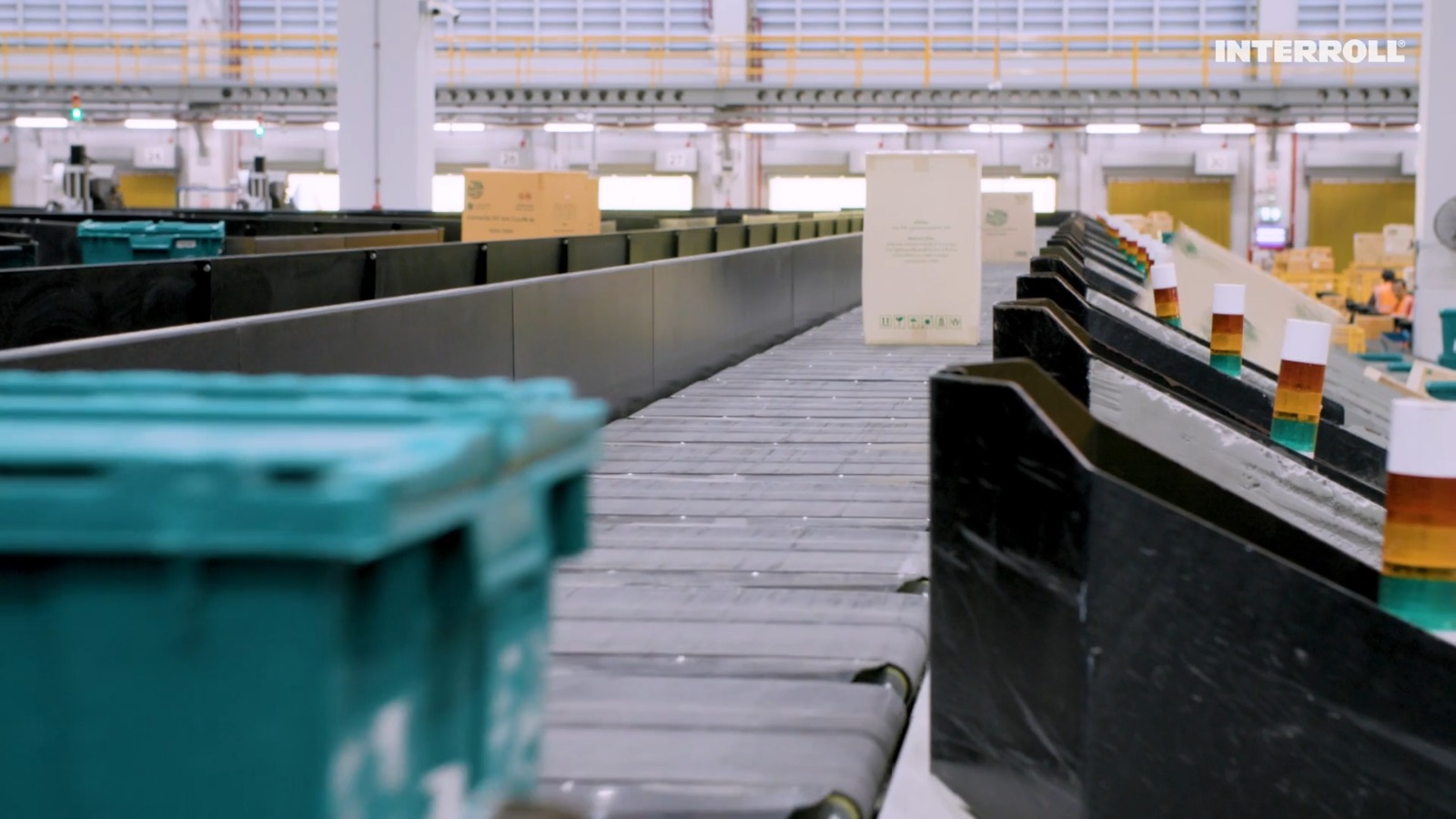
Conveyor and sorter bottlenecks reduce throughput, increase labor costs, delay orders, and can negatively affect customer satisfaction. In automated fulfillment operations, bottlenecks usually occur when one part of the material handling system cannot process items as quickly as the areas feeding into it.
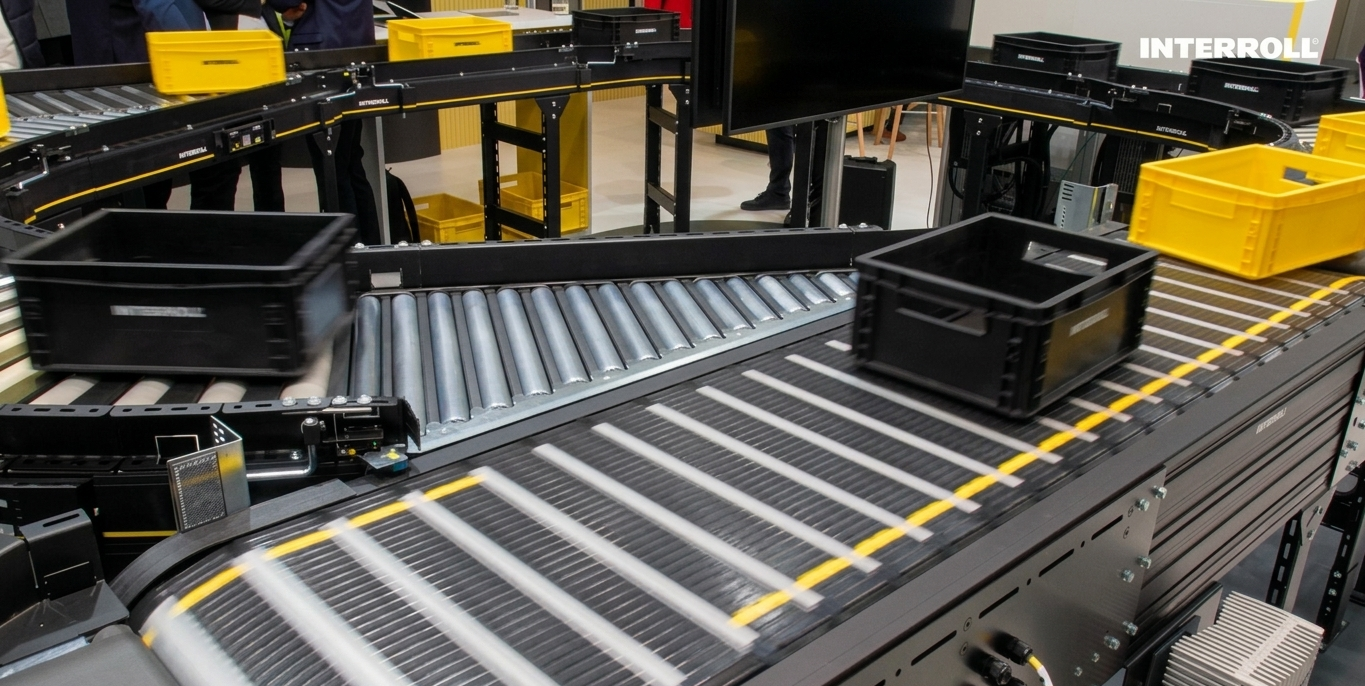
The most common bottleneck points are induction areas, merge zones, and sortation destinations. Operators can reduce these constraints by monitoring throughput, tracking accumulation, analyzing recirculation rates, and designing systems with scalable conveyor and sortation capacity. Interroll supports this approach with modular, energy-efficient material handling solutions designed for flexible warehouse growth
Key Takeaways
- Bottlenecks most often occur at induction points, merge zones, and destination lanes.
- Throughput should be monitored by zone to identify constraints before they affect operations.
- Modular conveyor platforms allow capacity to be expanded without major system replacement.
- Zero-pressure accumulation helps protect products while balancing uneven material flow.
- Right-sized sortation prevents both underperformance during peak periods and unnecessary overinvestment.
- Energy-efficient technologies such as 24V RollerDrive can reduce power consumption while supporting reliable operation.
- Preventive maintenance, spare parts planning, and trained technicians help avoid unplanned downtime.
Which Interroll Sorter Solution Fits Your Bottleneck?
Choosing the right sorter depends on where the bottleneck occurs, how many items need to be processed per hour, what product types are being handled, and how many destinations the system must serve.
For mid-volume e-commerce, warehousing, CEP, and shipping applications, the Interroll Sortteq Modular Chainbelt Sorter MC-S is a strong fit. It is designed for operations that need reliable linear sortation in the 3,000 to 8,000 items-per-hour range, helping close the performance gap between basic divert solutions and high-speed sorter systems. This makes it suitable for growing fulfillment operations that need more sortation capacity but want to avoid over-engineering the system.
For higher-throughput operations that require gentle handling, the Interroll MX-H Horizontal Crossbelt Sorter is better suited. It supports a wide range of items, including cartons, parcels, padded envelopes, clothing, packaged food, and other goods up to 50 kg, with throughput from 4,000 up to 20,000 items per hour. This makes it a good fit for large e-commerce, retail, and parcel environments where accuracy, speed, and product protection are critical.
For destination-side bottlenecks, Interroll’s HPD can be mentioned alongside the sorters. It supports slides, roller slides, alignment destinations, direct drop, bag drop, and conveyor connections, helping reduce discharge congestion after the sorter. This is important because bottlenecks often occur not only at the sorter itself, but also when destination lanes, chutes, or packing areas cannot clear items quickly enough.
What Causes Conveyor Sorter Bottlenecks?
Conveyor sorter bottlenecks are usually caused by mismatched throughput between connected processes. When upstream zones feed products faster than downstream areas can receive, accumulate, pack, or sort them, the system slows down or backs up. Common causes include slow manual induction, congested merge zones, full destination lanes, high recirculation rates, and poorly balanced sorter capacity.
Conclusion
Preventing conveyor and sorter bottlenecks starts with understanding where material flow slows down: induction points, merge zones, sorter discharge areas, and destination lanes. By monitoring throughput, balancing accumulation, reducing recirculation, and choosing the right sortation technology, fulfillment operators can protect system capacity before small constraints become costly operational delays.

.png?width=164&height=232&name=Sortation%20Portoflio%20carousel%20(1).png)

.png?width=8000&height=2600&name=TEMPLATE%20BANNERS%20(1).png)
.png?width=2560&height=1440&name=image%20(3).png)