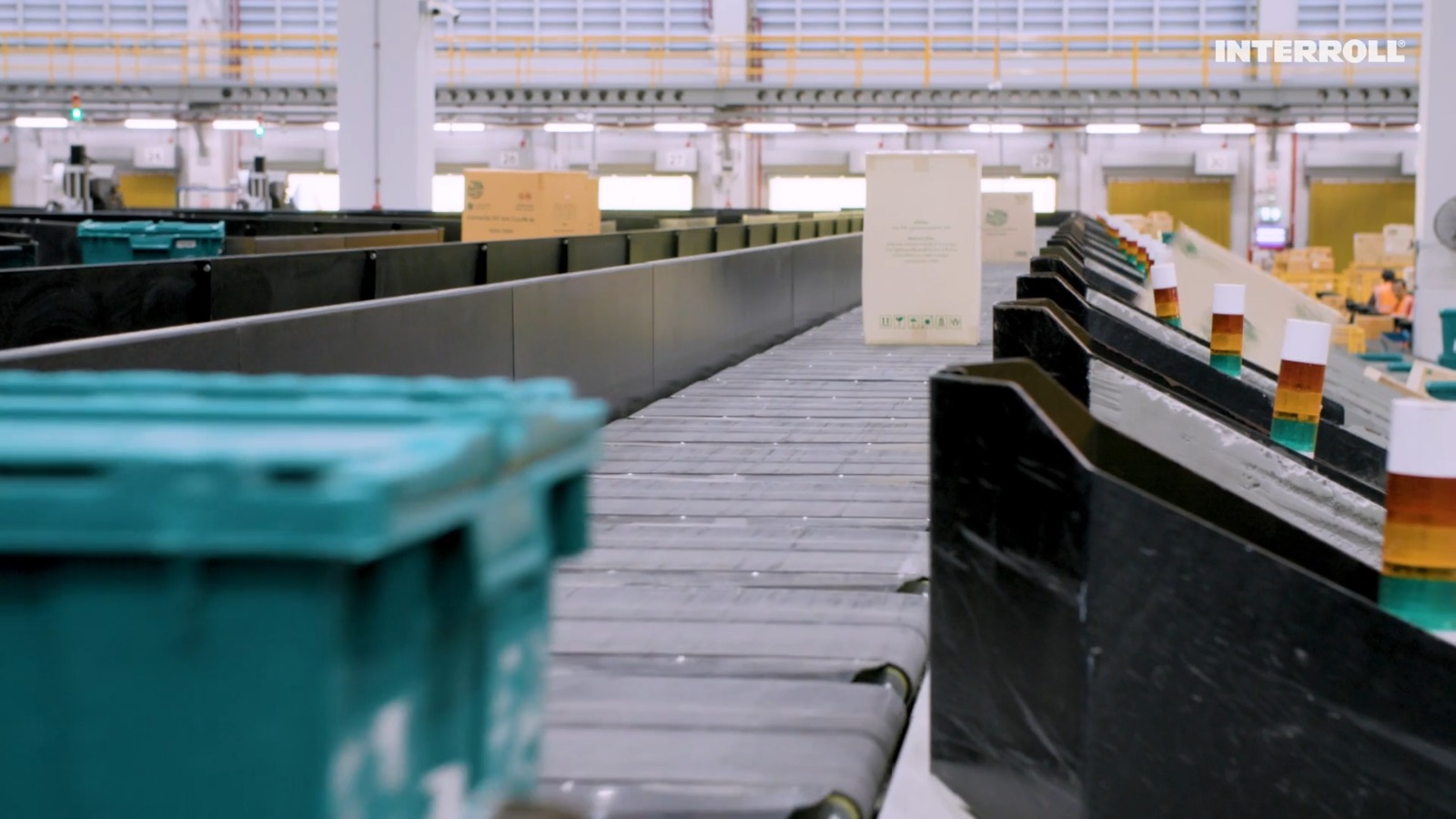
For years, parcel automation was largely associated with scale. Bigger hubs, higher speeds, and larger centralised systems defined much of the conversation. That logic still matters in backbone operations, but it is no longer the whole story.
Today, parcel networks are changing in a more structural way. More operators are expanding through regional hubs, delivery stations, city-near sort centers, and retailer-owned injection points. In parallel, many established CEP networks are reaching a stage where older infrastructure needs replacement or modernization. The result is not simply more automation. It is a different type of automation demand.
.
Sortation is moving closer to the consumer.
That matters because smaller and more decentralised facilities do not have the same requirements as major central hubs. They tend to operate with tighter footprints, greater CAPEX sensitivity, shorter implementation windows, and more pressure to automate inside existing buildings. In these environments, the question is not only how much throughput a sorter can deliver. The question is how well the solution fits the real operating conditions of the site.
This is one of the most important shifts in today’s sortation market. The market is still growing, but growth is no longer driven by a few large flagship projects alone. Instead, the number of smaller and mid-sized projects is increasing. Many of these are linked to last-mile expansion, regional capacity additions, brownfield upgrades, and network redesign programs.
E-commerce also plays an important role here. After the volatility of the COVID years, investment logic has become more predictable again. Retailers and parcel operators are resuming automation decisions with a longer planning horizon. That creates room for smarter network design, better throughput balancing, and more targeted facility automation.
Why are parcel networks becoming more decentralised?
There are several reasons behind this change.
First, delivery expectations continue to push distribution capacity closer to the end customer. Faster delivery windows, later cut-off times, and better service reliability all benefit from more localised parcel handling.
Second, many operators are redesigning networks to reduce unnecessary sorting stages. Zone-skipping strategies, for example, move more destination logic upstream so parcels can bypass intermediate nodes and travel more directly toward the final delivery area. That increases the need for distributed sortation capacity across the network.
Third, a large share of existing parcel infrastructure is no longer new. In many networks, facilities and equipment installed 20 to 25 years ago are being reassessed. That is leading to a wave of upgrades, replacements, and selective modernisation programs.
The combined effect is clear: the industry is moving from a small number of centralised mega-projects toward a larger number of right-sized automation projects.
What does this mean for sortation technology?
It means the winning solution is not always the most powerful one on paper.
In decentralised parcel facilities, operational priorities tend to look different. Throughput still matters, but so do compact footprint, easy integration, fast installation, low maintenance, scalability, and lower overall project risk. That is why the market is seeing growing relevance for mid-performance sortation concepts and modular approaches that can be deployed quickly inside real-world site constraints.
In practical terms, this shift favours technologies and layouts that support:
- compact installation in brownfield environments
- high destination density per meter
- manageable CAPEX
- fast commissioning
- future expansion without full system replacement
This is especially important in regional hubs, delivery stations, injection hubs, and other facilities where the throughput requirement is meaningful, but not at the level of a large national super-hub.
Why brownfield reality changes the buying decision?
One of the clearest lessons from the market is that last-mile growth often happens in brownfield conditions.
That means operators are rarely starting with a blank sheet of paper. They are working around existing walls, existing processes, limited installation windows, and ongoing operations that cannot simply be paused. In this context, compactness and implementation speed become strategic criteria.
A sorter that is technically impressive but hard to integrate may not be the right answer. A sorter that matches throughput needs, fits the footprint, and comes with lower lifecycle complexity may create more real value.
This is also why the conversation in sortation is shifting from headline speed to operational fit.
What should operators, OEMs, and system integrators focus on now?
The first step is to move beyond a one-size-fits-all view of parcel automation.
Operators should start with network role, throughput profile, item mix, destination density, and site constraints before selecting a technology path. OEMs and system integrators should build around right-sized performance, not over-specification. And all stakeholders should treat sortation as part of a broader system decision that includes infeed logic, controls, serviceability, and future expansion.
The companies that make the best decisions in the coming years will not necessarily be the ones that buy the biggest systems. They will be the ones that choose the sortation architecture that best matches the new network reality.
Parcel automation is entering a new phase. The next wave of growth will not come only from central hubs. It will come from regional and last-mile infrastructure, network modernisation, and brownfield expansion.
That creates a growing need for sortation solutions that are compact, scalable, easy to integrate, and aligned with the throughput needs of decentralised facilities. In other words, the market is moving toward right-sized automation.
Understanding that shift is the first step toward making better sortation decisions.


.png?width=8000&height=2600&name=TEMPLATE%20BANNERS%20(1).png)
.png?width=1200&height=628&name=Q2%20Sorters%20social%20graphic%20(7).png)