

Choosing Conveyor and Sorter Systems for Parcel Hubs 2026
by Davide Laudadio on May 27, 2026, 4:36:59 PM
.png?width=2560&height=1440&name=image%20(3).png)
This guide walks you through the complete process of selecting, designing, and scaling automated conveyor and sorter systems. You'll learn how to identify bottlenecks before they become problems, design for space constraints, and plan for future expansion. From decision frameworks to diagnostic checklists, everything you need to make an informed investment in your material handling infrastructure is covered here. Interroll delivers modular, energy-efficient solutions that help you build facilities capable of handling peak volumes while keeping operational costs under control.
Key Takeaways: Choosing Conveyor and Sorter Systems for Parcel Hubs 2026
- Match conveyor and sorter types to your specific throughput requirements, parcel mix, and facility layout before committing to a system design.
- Bottlenecks typically occur at induction points, merge zones, and sortation destinations: diagnose these areas first when troubleshooting throughput issues.
- Modular conveyor platforms allow you to scale capacity incrementally, reducing upfront capital expenditure and installation downtime.
- Interroll offers energy-efficient drum motors and modular conveyors that simplify maintenance and reduce total cost of ownership over time.
- Space-constrained facilities benefit from vertical sortation, compact accumulation zones, and overhead conveyor routing to maximize floor utilization.
What Are Automated Conveyor and Sorter Systems?
Automated conveyor and sorter systems are material handling equipment that transport and route packages to designated destinations without manual labor. Conveyors move items along a defined path, while sorters divert them to specific lanes, chutes, or bins based on preset criteria like destination, size, or weight.
In parcel hubs, these systems form the backbone of operations. They connect receiving docks to storage areas, processing stations to shipping lanes, and everything in between. The automation eliminates repetitive manual handling, speeds up processing times, and reduces error rates.
Modern systems incorporate sensors, scanners, and control software that read barcodes or RFID tags. This data triggers sorting decisions in real time, routing each parcel to its correct destination automatically.
Why Are Conveyor and Sorter Systems Critical for Parcel Hubs?
Parcel hubs process thousands of packages per hour. Manual handling at this scale is neither cost-effective nor reliable. Conveyor and sorter systems allow you to maintain consistent throughput regardless of labor availability or shift changes.
Speed matters in parcel logistics. Customers expect fast delivery windows, and every minute a package sits idle in your facility adds to your operational costs. Automated systems keep parcels moving continuously from dock to dock.
Accuracy is equally important. Mis-sorted packages create costly rework, delayed deliveries, and customer complaints. Automated sortation reduces human error and ensures parcels reach their intended destinations.
How Do Conveyors and Sorters Impact Throughput Performance?
Throughput is measured in parcels processed per hour. Your conveyor speed, sorter capacity, and system layout all contribute to this metric. A well-designed system moves packages through each zone without accumulation or starvation.
Bottlenecks occur when one part of your system cannot keep pace with upstream or downstream flows. Identifying and eliminating these constraints is essential for maximizing your investment return.
Types of Conveyor Systems for Parcel and Fulfillment Operations
Different conveyor types serve different purposes. Selecting the right combination depends on your parcel characteristics, facility layout, and throughput requirements.
Belt Conveyors for General Transport
Belt conveyors are the workhorses of most material handling systems. A continuous belt carries packages across flat or inclined surfaces. They handle a wide range of parcel sizes and weights, making them versatile for general transport applications.
Belt conveyors work well for moving packages between zones, feeding sorters, and accumulating products before processing. They require regular maintenance to keep belts tensioned and tracking properly.
Roller Conveyors for Accumulation and Controlled Flow
Roller conveyors use individual rollers mounted in a frame to support and move packages. Powered versions use motorized rollers or belt drives to propel items forward. Non-powered gravity rollers rely on incline or manual pushing.
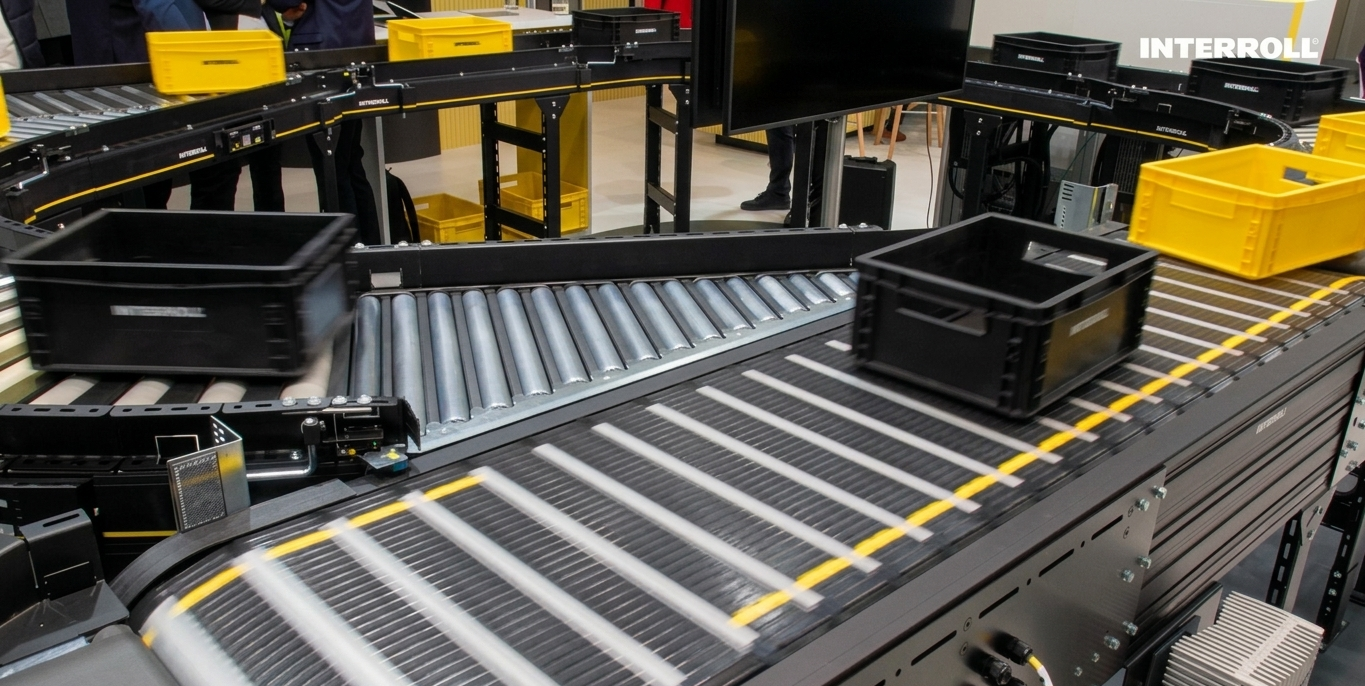
Interroll manufactures conveyor rollers designed for unit-load handling in internal logistics. These rollers support accumulation zones where packages queue before processing or sortation. Motorized roller conveyors offer zero-pressure accumulation, preventing package damage from collisions.
Modular Plastic Belt Conveyors for Curved Paths
Modular plastic belt conveyors consist of interlocking plastic segments that form a flexible conveying surface. They excel at navigating curves, spirals, and elevation changes where traditional belt conveyors cannot perform effectively.
These conveyors suit facilities with complex layouts requiring frequent directional changes. The modular design also simplifies belt repairs—you replace individual segments rather than entire belts.
Overhead Conveyors for Space Optimization
Overhead conveyors suspend packages from carriers traveling along elevated tracks. They free up floor space for other operations and work well for garment handling, bagging systems, and cross-dock applications.
In space-constrained facilities, overhead routing allows you to move packages across busy floor areas without interfering with forklift traffic or pedestrian walkways.
Lat Mile - Navigator: Strategic Guide for OEM's and End Users
Types of Sorter Systems for High-Throughput Operations
Sorters divert packages from a main conveyor line to designated destinations. The sorter type you choose depends on your throughput requirements, parcel characteristics, and the number of sort destinations needed.
Crossbelt Sorters for High Speed and Gentle Handling
Crossbelt sorters use individual carriers, each equipped with a small belt conveyor mounted perpendicular to the direction of travel. When a carrier reaches its destination, the belt activates and transfers the package off to a chute or takeaway conveyor.
These sorters handle fragile items gently because packages ride on their own carrier rather than sliding across surfaces. Crossbelt sorters achieve high speeds and accommodate a wide range of parcel sizes. They typically support over 100 sort destinations, making them ideal for large distribution centers.
Sliding Shoe Sorters for Medium to High Throughput
Sliding shoe sorters use rows of flat shoes mounted on a moving conveyor surface. When activated, the shoes slide diagonally, pushing the package off the main line to a designated chute. The diverting motion is smooth and controlled.
Sliding shoe sorters balance speed with cost-effectiveness. They work well for flat-bottom packages and poly-bagged items but may not handle irregularly shaped goods as reliably.
Tilt Tray Sorters for Varied Product Mixes
Tilt tray sorters carry packages on individual trays that tip at designated points to discharge items into chutes or bins. They handle a diverse range of product shapes and sizes, including small items that might fall through gaps on other sorter types.
Tilt tray systems are common in postal and parcel operations where package variety is high. They offer flexibility but typically run at lower speeds than crossbelt or sliding shoe alternatives.
Pop-Up Wheel and Diverter Sorters for Lower Volume Applications
Pop-up wheel sorters use wheels that rise from beneath the conveyor surface to redirect packages. When activated, the wheels spin at an angle, pushing items off the main line. Diverter sorters use pusher arms or paddles to accomplish similar redirection.
These sorters suit lower throughput applications or secondary sorting needs. They cost less than loop sorters and fit into tighter spaces, but their capacity limits make them unsuitable for high-volume primary sortation.
Decision Framework: How to Select the Right Conveyor and Sorter System
Selecting conveyor and sorter systems requires matching equipment capabilities to your operational requirements. Follow this decision framework to guide your evaluation.
Step 1: Define Your Throughput Requirements
Calculate your peak hourly volume, not just your average. Parcel hubs experience significant volume spikes during peak seasons, promotional events, and end-of-day processing windows. Your system must handle these peaks without creating backlogs.
Express throughput in parcels per hour and consider future growth. A system designed for current volumes may become a constraint sooner than expected.
Step 2: Analyze Your Parcel Mix
Document the size, weight, and shape distribution of parcels flowing through your facility. Include extremes—your largest, smallest, heaviest, and lightest items. Note the percentage of poly-bags, irregularly shaped packages, and fragile goods.
This analysis determines which conveyor surfaces and sorter mechanisms will handle your products reliably. A sorter that works perfectly for cartons may fail with poly-bags or cylinders.
Step 3: Map Your Facility Layout and Constraints
Document available floor space, ceiling heights, column locations, and existing equipment positions. Note areas with restricted access, fire exits, and utility connections that limit equipment placement.
Space constraints often drive design decisions. A facility with abundant floor space can use conventional horizontal sorting loops. Tight spaces require creative solutions like vertical sortation or multi-level conveyor routing.
Step 4: Determine Sort Destination Count
Count the number of unique destinations your system must serve. This includes outbound shipping lanes, storage zones, exception handling areas, and returns processing stations.
Sorter selection depends heavily on destination count. A facility with 20 destinations can use simpler diverter systems. Operations requiring 150 or more destinations need loop sorters with the capacity to serve that many chutes or takeaways.
Step 5: Evaluate Total Cost of Ownership
Purchase price represents only part of your investment. Consider installation costs, energy consumption, maintenance requirements, spare parts availability, and expected service life. A lower-priced system with higher operating costs may prove more expensive over time.
Interroll drum motors reduce energy consumption compared to traditional external drive systems. Their sealed, compact design minimizes maintenance requirements and extends service intervals, lowering your total cost of ownership.
Common Bottlenecks in Conveyor and Sorter Systems
Bottlenecks limit your system's effective throughput. Identifying and addressing these constraints is essential for meeting performance targets.
Induction Point Congestion
Induction is where packages enter the sortation system. Manual induction relies on operators placing items on the conveyor at the correct spacing and orientation. When operators cannot keep pace with sorter capacity, the entire system runs below its potential.
Automated induction uses singulators, aligners, and scanners to prepare packages without manual handling. This removes human limitations from the equation but requires consistent package characteristics for reliable operation.
Merge Zone Conflicts
Merge zones combine flows from multiple conveyor lines into a single stream. Poorly designed merges create collisions, gaps, and backups that reduce throughput and risk package damage.
Effective merge designs use sensors, variable speed control, and accumulation conveyors to time package entry and maintain proper spacing. Avoid merging more than two lines at a single point.
Sortation Destination Overloads
When too many packages route to the same destination, chutes fill up and the sorter must recirculate items or stop entirely. This condition spreads delays throughout the system as upstream conveyors accumulate waiting packages.
Balance destination assignments and monitor chute levels in real time. Recirculation lanes allow packages to loop back for another sort attempt, but excessive recirculation consumes system capacity.
Scanner Read Rate Failures
Sorters rely on barcode or RFID scans to make routing decisions. When scanners fail to read labels, packages route to exception handling areas that require manual intervention. High no-read rates create labor demand and delay processing.
Optimize label placement standards, maintain scanner cleanliness, and use multi-sided scanning arrays to improve read rates. Track no-read statistics to identify problematic package types or label formats.
Diagnostic Checklist for Troubleshooting Throughput Issues
When your system fails to meet throughput targets, use this checklist to identify the root cause systematically.
Symptom: Packages Accumulating Before Induction
Check induction rate versus sorter capacity. If induction cannot keep pace, evaluate whether operators need additional training, whether automated induction equipment is functioning properly, or whether package characteristics prevent reliable automated handling.
Symptom: Gaps in Sorter Flow
Measure package spacing on the sorter. Excessive gaps reduce effective throughput because the sorter moves empty carrier positions. Adjust induction timing, singulator settings, or upstream conveyor speeds to close gaps.
Symptom: Frequent Recirculation
Track recirculation rates by destination. Identify which chutes trigger the most recirculations. Full chutes indicate imbalanced destination assignments or insufficient takeaway capacity. No-reads indicate scanning issues.
Symptom: System Stops or Slowdowns
Review fault logs and alarm histories. Jams, sensor failures, motor overloads, and emergency stops all appear in system logs. Identify patterns—repeated faults at specific locations point to equipment issues or design problems.
Sortation Navigator: Last Mile Solution For System Integrators
Designing for Space-Constrained Parcel Hub Facilities
Many parcel operations must fit high-capacity systems into limited footprints. Smart design choices maximize throughput per square meter.
Vertical Sortation and Multi-Level Layouts
When floor space is limited, build upward. Multi-level sorter installations stack destinations vertically, using spiral conveyors or vertical lifts to connect levels. Mezzanine structures support sortation equipment above ground-level operations.
Vertical designs require careful load planning. Structural engineers must verify that building columns and floors can support equipment weight and dynamic loads from moving packages.
Compact Accumulation Zones Using Zero-Pressure Technology
Traditional accumulation conveyors require long runout zones for packages to queue. Zero-pressure accumulation uses individually controlled roller zones that stop each package in place without contact pressure. This technology allows shorter accumulation lanes in tight spaces.
Interroll's modular conveyor platform supports zero-pressure accumulation configurations. Each zone operates independently, stopping packages gently without pushing against downstream items. This prevents product damage and allows dense queuing.
Overhead Routing to Bypass Floor Obstructions
When floor-level routes conflict with other traffic or equipment, route conveyors overhead. Elevated conveyor bridges span aisles, and overhead accumulation loops hold packages without consuming floor space.
Overhead installations require support structures mounted to building steel or freestanding frames. Account for maintenance access—technicians need safe platforms to service elevated equipment.
Scalability Planning: How to Design for Future Expansion
Parcel volumes grow over time. A system that meets current needs may become inadequate as your business expands. Plan for scalability from the start.
Modular System Architecture for Incremental Growth
Modular systems allow you to add capacity without replacing existing equipment. Additional conveyor sections, sorter extensions, and new destinations integrate with your installed base. This approach spreads capital expenditure over time.
Interroll builds modular and scalable material handling solutions. Their conveyor modules and drive components connect using standardized interfaces, simplifying future expansion projects. You can add capacity during scheduled maintenance windows with minimal disruption.
Reserved Space and Utility Connections
Allocate floor space for future equipment even if you do not install it immediately. Run electrical conduit and data cabling to expansion areas. Installing infrastructure now costs less than retrofitting later.
Document your expansion plan and share it with facility planners. Building modifications, permits, and utility upgrades take time to arrange. Starting the process early prevents delays when you are ready to expand.
Control System Capacity for Additional I/O
Your programmable logic controllers, warehouse management system interfaces, and network infrastructure must accommodate growth. Specify control systems with reserve input/output capacity and processing headroom.
Software scalability matters too. Confirm that your warehouse execution system can manage additional zones, destinations, and package volumes without performance degradation.
Energy Efficiency in Conveyor and Sorter Operations
Energy costs contribute significantly to total operating expenses. Efficient equipment reduces utility bills and supports sustainability objectives.
Drum Motors Versus External Drive Systems
Traditional conveyors use external motors connected to rollers through chains, belts, and gearboxes. These drivetrains consume energy through friction losses and require regular maintenance.
Drum motors integrate the motor, gearbox, and bearings inside the drive roller. This compact design eliminates external drivetrain components, reducing energy consumption and maintenance needs. Interroll drum motors deliver proven energy efficiency and reliable performance across demanding parcel handling applications.
Zone-Based Motor Control
Running all conveyor motors continuously wastes energy when sections are empty. Zone-based control activates motors only when packages are present, detected by photoeyes or other sensors.
Modern control systems implement sleep modes that power down idle zones automatically. When a package enters a dormant zone, the controller wakes the motors instantly to resume transport.
Regenerative Braking on Decline Conveyors
Packages moving down inclines generate energy as they descend. Regenerative drives capture this energy and feed it back to the electrical grid or other system components. This reduces net energy consumption in facilities with significant vertical transport.
Maintenance Strategies for Conveyor and Sorter Reliability
Unplanned downtime disrupts operations and delays shipments. Proactive maintenance keeps your system running reliably.
Preventive Maintenance Schedules
Establish routine inspection and service intervals based on manufacturer recommendations and operating conditions. Tasks include belt tensioning, roller cleaning, bearing lubrication, sensor calibration, and wear component replacement.
Document all maintenance activities and track equipment condition over time. This data helps you predict failures and schedule repairs before breakdowns occur.
Condition-Based Monitoring
Sensors can detect early signs of equipment degradation. Vibration monitors on motors and bearings identify imbalance or wear. Current sensors flag motors working harder than normal. Temperature monitors catch overheating components.
Condition-based monitoring allows you to address problems before they cause failures. This approach reduces both emergency repairs and unnecessary preventive replacements.
Spare Parts Inventory Management
Stock critical spare parts on-site to minimize downtime when components fail. Identify parts with long lead times or high failure rates and maintain appropriate inventory levels.
Interroll's global service network supports customers with spare parts availability and technical assistance. Accessible replacement parts reduce the time your system spends waiting for repairs.
Integration with Warehouse Management and Control Systems
Conveyor and sorter hardware must communicate with your software systems to function effectively.
Warehouse Management System Interfaces
Your warehouse management system tracks inventory and directs order fulfillment activities. It sends sort instructions to the material handling control system based on order priorities, shipping schedules, and destination assignments.
Clear interface specifications prevent integration problems. Define message formats, communication protocols, and handshaking procedures before equipment arrives.
Warehouse Control System Functions
The warehouse control system manages real-time equipment operation. It receives sort commands from the WMS, routes packages to destinations, tracks package locations, and reports system status back to management software.
Control system responsiveness matters for high-speed sortation. Decisions must execute within milliseconds as packages travel past divert points. Test system performance under peak load conditions.
Data Collection and Performance Analytics
Modern systems generate extensive operational data. Track throughput rates, sort accuracy, no-read rates, jam frequencies, and equipment utilization. Analyze trends to identify improvement opportunities.
Dashboards displaying real-time and historical metrics help supervisors manage operations. Alerts notify personnel when performance deviates from targets.
Safety Considerations for Automated Material Handling
Conveyor and sorter systems pose hazards that require appropriate safeguards. Protect your personnel while maintaining operational efficiency.
Guarding and Access Controls
Install guards around moving parts, pinch points, and areas where packages could fall from conveyors. Interlocked access doors prevent entry while equipment operates. Emergency stop buttons must be accessible throughout the system.
Conduct risk assessments during design to identify hazards and specify appropriate safeguards. Follow applicable machine safety standards and local regulations.
Ergonomic Workstation Design
Manual induction stations, exception handling areas, and maintenance access points must accommodate human factors. Set conveyor heights to minimize bending and reaching. Ensure adequate lighting and provide anti-fatigue mats for standing positions.
Involve operators in workstation design reviews. Their input identifies practical issues that engineering drawings may miss.
Training and Procedures
All personnel working around automated equipment need safety training. Topics include hazard awareness, emergency procedures, lockout-tagout protocols, and proper use of personal protective equipment.
Document operating procedures and make them accessible at workstations. Regular refresher training reinforces safe practices.
Project Implementation: From Design to Startup
Installing a conveyor and sorter system involves multiple phases. Plan each stage carefully to avoid delays and cost overruns.
Design and Engineering Phase
Work with your equipment supplier to develop detailed layouts, equipment specifications, and control system architecture. Review designs with operations, maintenance, and safety stakeholders before finalizing.
Request 3D models and simulations to visualize the system and validate throughput calculations. Identify potential problems before fabrication begins.
Manufacturing and Delivery
Equipment manufacturing takes time. Establish delivery schedules that align with your site preparation timeline. Stage deliveries to arrive when installation crews are ready to receive them.
Inspect equipment upon arrival. Document any shipping damage and resolve claims promptly.
Installation and Commissioning
Installation requires coordination between equipment suppliers, electrical contractors, controls integrators, and your facilities team. Establish clear communication channels and regular progress meetings.
Commissioning verifies that installed equipment operates according to specifications. Test each component individually, then integrate zones and validate end-to-end package flow.
Operator Training and Go-Live Support
Train operators before go-live. Cover normal operations, exception handling, basic troubleshooting, and safety procedures. Provide reference materials for ongoing support.
Plan for supplier support during the initial operating period. Technical representatives can help resolve startup issues quickly and build your team's confidence with the new system.
In Conclusion: How to Choose the Right Conveyor and Sorter for Your Parcel Hub
Selecting conveyor and sorter systems requires balancing throughput requirements, parcel characteristics, space constraints, and budget considerations. Start with a clear understanding of your operational needs and evaluate equipment options systematically.
Prioritize systems that support future growth. Modular platforms from manufacturers like Interroll allow you to expand capacity incrementally as your volumes increase. Energy-efficient components and low-maintenance designs reduce long-term operating costs.
Address potential bottlenecks during the design phase. Induction capacity, merge zone design, and destination balance all affect your system's real-world performance. Use diagnostic approaches to troubleshoot issues when they arise.
With thoughtful planning and the right equipment partners, your parcel hub can achieve the throughput, accuracy, and reliability your operation demands.
Last Mile - Navigator: The ultimate guide to choose the right sortation system
Every package that moves through your facility needs to reach the right destination without delays, damage, or manual intervention. The conveyor and sorter systems you choose will determine whether you hit your throughput targets or fall behind.

You May Also Like
These Related Stories
Meet the MC-S: High Destination Density Without the High-Speed Complexity
.png?width=8000&height=2600&name=TEMPLATE%20BANNERS%20(1).png)
How Parcel Networks Are Changing - and What That Means for Sortation Automation
.png?width=1200&height=628&name=Q2%20Sorters%20social%20graphic%20(7).png)