In automated warehouses and distribution centers, every incorrectly rejected package creates unnecessary work.
False rejects can interrupt product flow, increase manual handling, and reduce overall sorting efficiency. As parcel volumes grow and product types become more diverse, maintaining accurate sortation becomes increasingly challenging.
But what causes false rejects, and how can the right conveyor and sorter technologies help prevent them?
What are false rejects in conveyor sortation systems?
A false reject occurs when a package that should be successfully sorted is incorrectly sent to a reject lane or exception handling area.
Unlike legitimate rejects caused by unreadable labels or non-compliant packages, false rejects may result from identification failures, inconsistent product spacing, tracking errors, or incorrect diversion.
Even a small number of recurring false rejects can create bottlenecks and increase operational costs, particularly in high-throughput environments.
What are the main causes of false rejects?
False rejects often originate from issues in the interaction between conveyors, identification systems, and sorting equipment.
The most common causes include:
- Inconsistent product spacing: Packages traveling too close together can interfere with identification and sorting accuracy.
- Barcode scanning errors: Incorrect label positioning, damaged barcodes, or scanner misalignment can prevent accurate identification.
- Tracking inaccuracies: When the control system loses track of a package's position, diversion decisions may be executed incorrectly.
- Unstable product movement: Unexpected changes in speed, orientation, or position can affect sorting performance.
- Incorrect sorter synchronization: Poor coordination between conveyor speeds, sensors, and diversion mechanisms can lead to sorting errors.
Addressing these issues requires a coordinated approach to both conveyor flow and sortation technology.
How can sorter technology help reduce false rejects?
Reliable sortation depends on delivering each product to the correct destination at the right moment.
Sorter design plays an important role, particularly in facilities handling different package sizes, weights, and shapes.
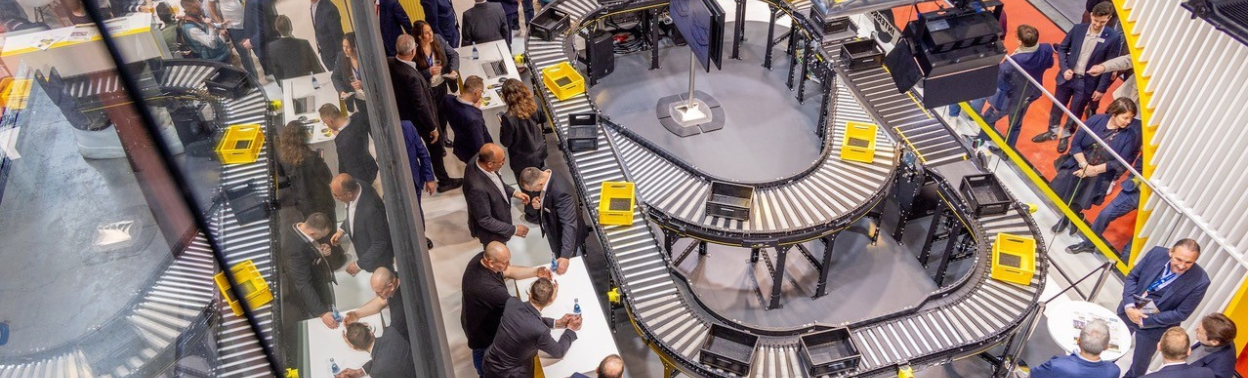
For example, Interroll's Sortteq Modular Chainbelt Sorter (MC-S) is designed for accurate, controlled sorting in applications requiring up to 8,000 items per hour.
Its chainbelt technology actively diverts products toward their designated destinations, supporting gentle and reliable handling across different item types, including cartons, totes, polybags, and irregular packages.
With a modular design and a 30° divert angle for controlled product discharge, MC-S provides a solution for facilities that need reliable sorting performance without unnecessary system complexity.
However, sorter performance also depends on what happens before products reach the sorting point.
Why is product spacing important for sorting accuracy?
Even a high-performance sorter cannot compensate for inconsistent product flow.
When packages arrive too close together or at irregular intervals, scanners may struggle to identify individual items, and sorting mechanisms may have insufficient time to execute the correct diversion.
This is where intelligent conveyor control becomes particularly valuable.
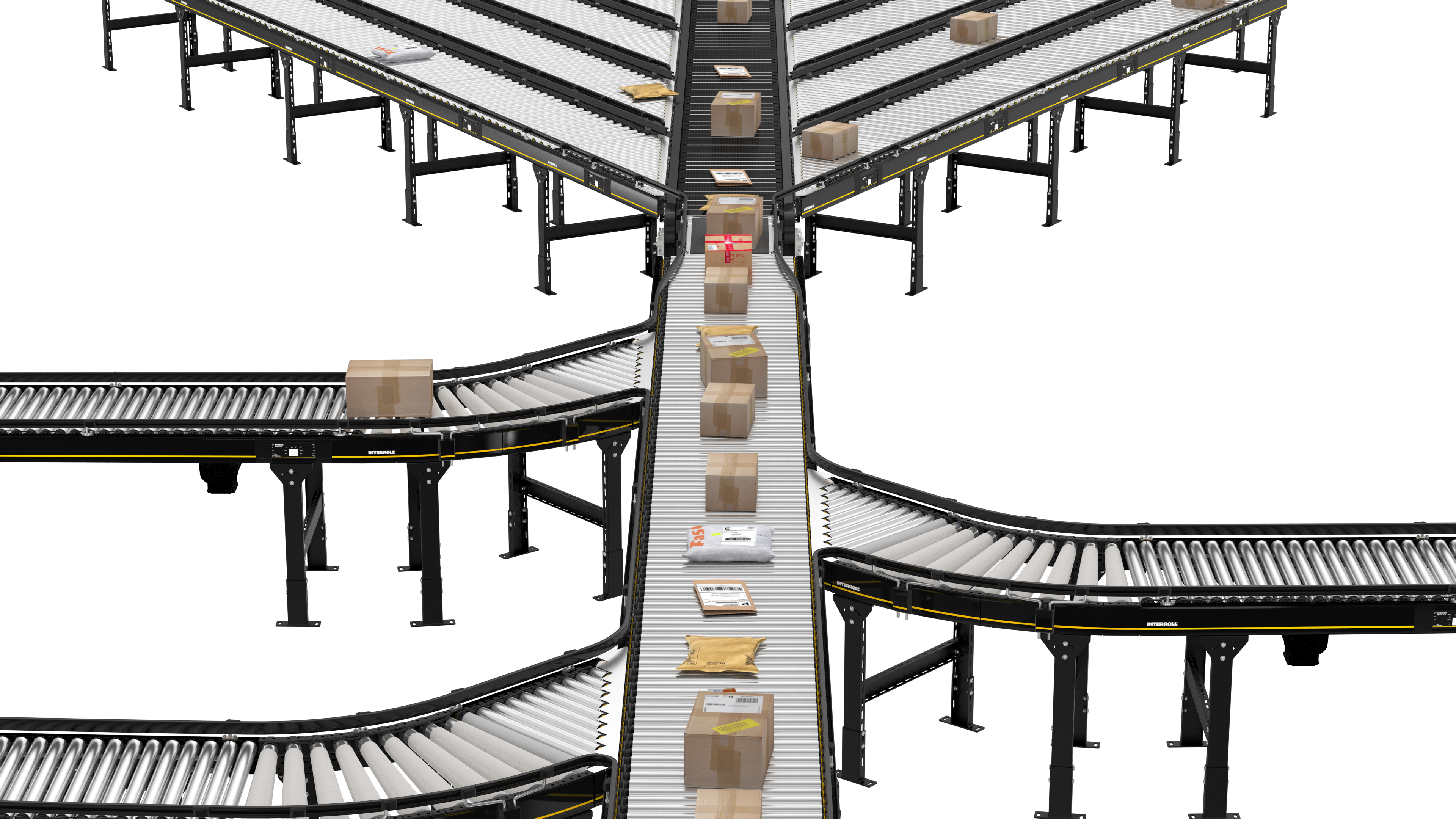
Interroll MCP PLAY, the advanced evolution of the Modular Conveyor Platform, helps optimize how products move through conveyor systems.
Its key functionalities include:
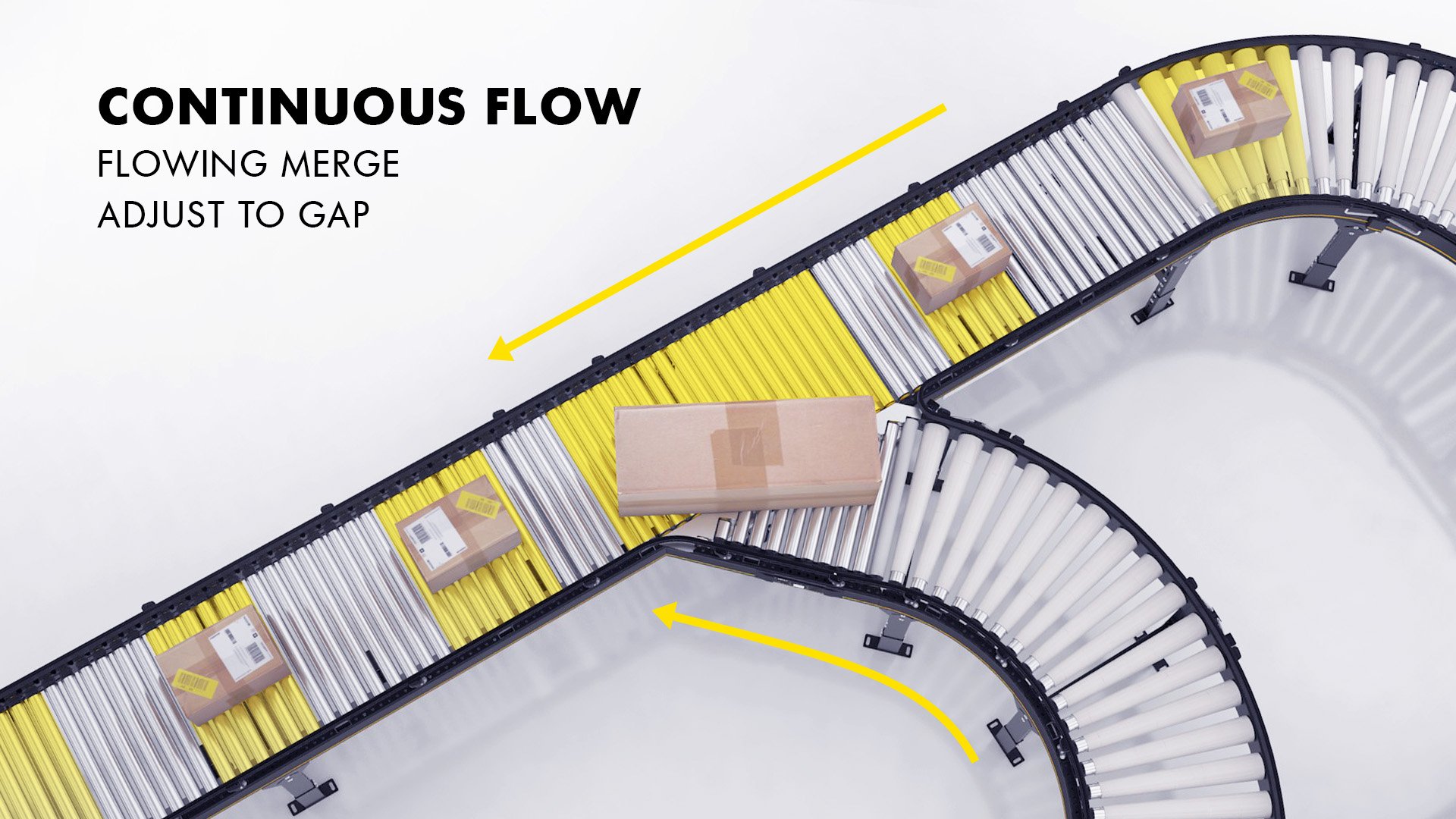
Adjust the Gap: Dynamically optimizes spacing between products, supporting consistent identification and downstream sorting.
Flowing Merge: Enables smoother merging of products from different conveyor lines, reducing unnecessary stops and interruptions.
Tracking: Provides visibility into product positions and supports coordinated routing and material flow management.
By improving product spacing and movement, MCP PLAY helps create the conditions needed for more reliable downstream sortation.
How do MCP PLAY and MC-S complement each other?
Sorting accuracy is not determined by the sorter alone. It depends on the entire material handling process.
A conveyor system must identify, separate, and deliver packages consistently before the sorter can direct them to their destinations.
This is where Interroll's modular technologies complement each other.
MCP PLAY helps optimize product flow, supporting consistent spacing, controlled merging, and improved tracking.
MC-S provides the sorting technology, enabling accurate and reliable product diversion across multiple destinations.
Together, these solutions support a more coordinated material handling process, helping facilities minimize avoidable sorting errors while maintaining efficient throughput.
For e-commerce, parcel distribution, and omnichannel fulfillment operations, this combination can be particularly valuable when handling increasingly diverse product flows.
How can warehouses prevent recurring false rejects?
Reducing false rejects requires both the right technology and regular monitoring of system performance.
Operators should focus on:
- Monitoring reject rates to identify recurring issues.
- Maintaining scanner accuracy and sensor alignment.
- Ensuring consistent product spacing before sortation.
- Checking synchronization between conveyors and sorting mechanisms.
- Selecting sorting technologies suited to their product mix and throughput requirements.
Combining these measures with intelligent conveyor control and reliable sorting equipment helps improve overall system performance.
Why is accurate sortation essential for warehouse efficiency?
False rejects are more than isolated sorting errors. They can indicate inefficiencies in product identification, conveyor flow, or equipment synchronization.
Reducing these errors helps warehouses minimize unnecessary handling, improve throughput, and maintain reliable operations.
With solutions such as MCP PLAY and the Interroll Sortteq Modular Chainbelt Sorter MC-S, Interroll supports a coordinated approach to conveying and sorting, helping businesses manage increasingly complex material flows.
Frequently Asked Questions
What causes false rejects in automated sortation systems?
False rejects can be caused by barcode reading errors, inconsistent product spacing, tracking inaccuracies, unstable product movement, or incorrect sorter synchronization.
How can automated sorters improve sorting accuracy?
Automated sorters use controlled diversion mechanisms to direct products to the correct destinations. Technologies such as Interroll MC-S support reliable handling of different package types.
How does MCP PLAY support accurate sortation?
MCP PLAY optimizes conveyor flow through functionalities such as Adjust the Gap, Flowing Merge, and Tracking, helping maintain controlled product movement before sorting.
Can intelligent conveyor systems eliminate false rejects?
While no system can guarantee zero false rejects, improving product spacing, identification, tracking, and sorter synchronization can significantly reduce avoidable errors.
Discover how Interroll can improve your sorting performance
Reliable sortation starts with controlled product flow and the right sorting technology.
Discover how Interroll MCP PLAY and the Sortteq Modular Chainbelt Sorter MC-S can help improve material flow, support accurate sorting, and keep your operations running efficiently.